


Secure ECDIS updates, automated for every ship in your fleet
DIDI Chart delivers secure ECDIS updates to each vessel on its own — the weekly ENC update, verified twice before it installs, with no USB stick on the bridge and no need to put your ECDIS online.
€70 per vessel per month · first month free on one vessel
DIDI Chart
The weekly ENC update reaches every ship in your fleet on its own — collected, checked and delivered ready to install, to any ECDIS, any make or model. Nobody downloads anything, nobody carries a USB stick to the bridge.
Nothing plugged in, nothing online
No USB stick reaches the bridge, and the ECDIS never goes on a network — connections are outbound only, from the vessel.
Updates arrive on their own
Verified twice against the supplier's own values, so nothing incomplete or altered ever reaches the ECDIS.
Every ship from your desk
Which vessels are current, which are pending, where attention is needed — in any browser, no app to install.
8,000+ charts in just over an hour
during a DIDI Chart installation, after an ECDIS update had wiped every chart on board

The ENC update process is the biggest attack surface on the bridge
Every removable device connected to an ECDIS is an open door, and every manual transfer is an audit finding waiting to be documented. DIDI Chart closes that door completely.
Reported worst cases include hacked ECDIS chart systems.
- +103%
- maritime cyber incidents in 2025 — 828 reported, up from 408 in 2024
- +150%
- growth in attacks on maritime operational technology systems
- $550k
- average cost of a single maritime cyber attack
CYTUR maritime cyber review, 2025. Longer trend: Naval Dome recorded a 900% rise in attacks on maritime OT systems from 2017 to 2020.
What DIDI Chart solves
No removable media
Nothing is plugged into the ECDIS. The USB route into the bridge simply closes.
The ECDIS never goes online
Connections are outbound only, initiated from the vessel. No inbound path and no open ports on board.
SecureReceive: nothing unverified arrives
Every file is hash-checked twice against the supplier's own values, under TLS 1.3 in transit. A partial update never reaches the ECDIS.

Three systems, each built to close one gap
DIDI Chart retires the USB stick. DIDI GNSS tells the bridge how far a fix can be trusted. DIDI MRV turns compliance into a routine export. Each works on its own — and better together.
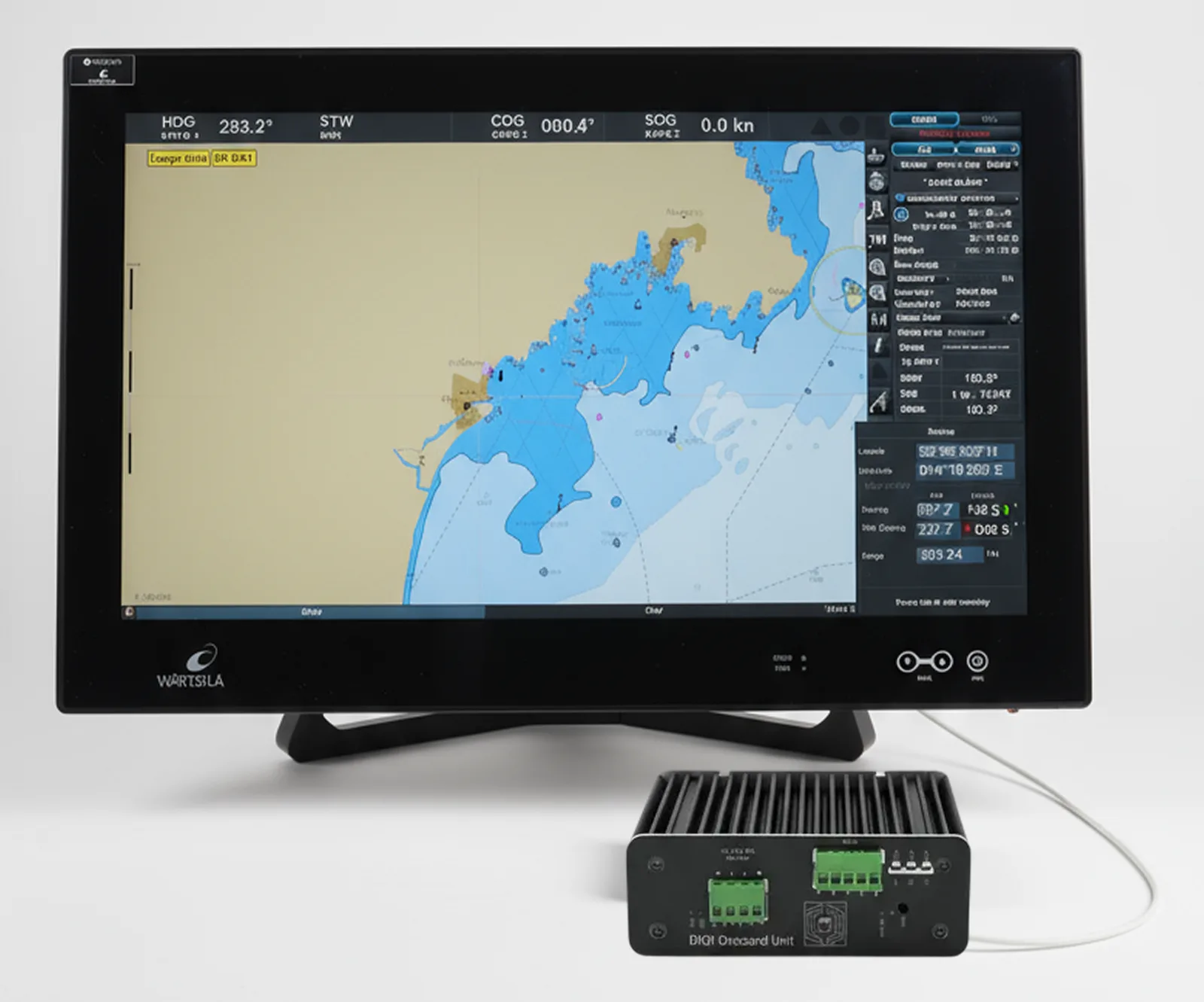 Chart Updates
DIDI Chart
ENC updates, fully automated. Your ECDIS stays offline.
Chart updates that look after themselves. Every update arrives prepared, checked and ready to install — no USB sticks, no downloads to chase, and no crew time spent on chart admin. Your ECDIS never has to go online.
- Fully automated chart updates — no USB sticks, no chart admin for the crew
- Works with any ECDIS — no hardware changes, no bridge refit
- Every chart held on board, ready to restore — even offline
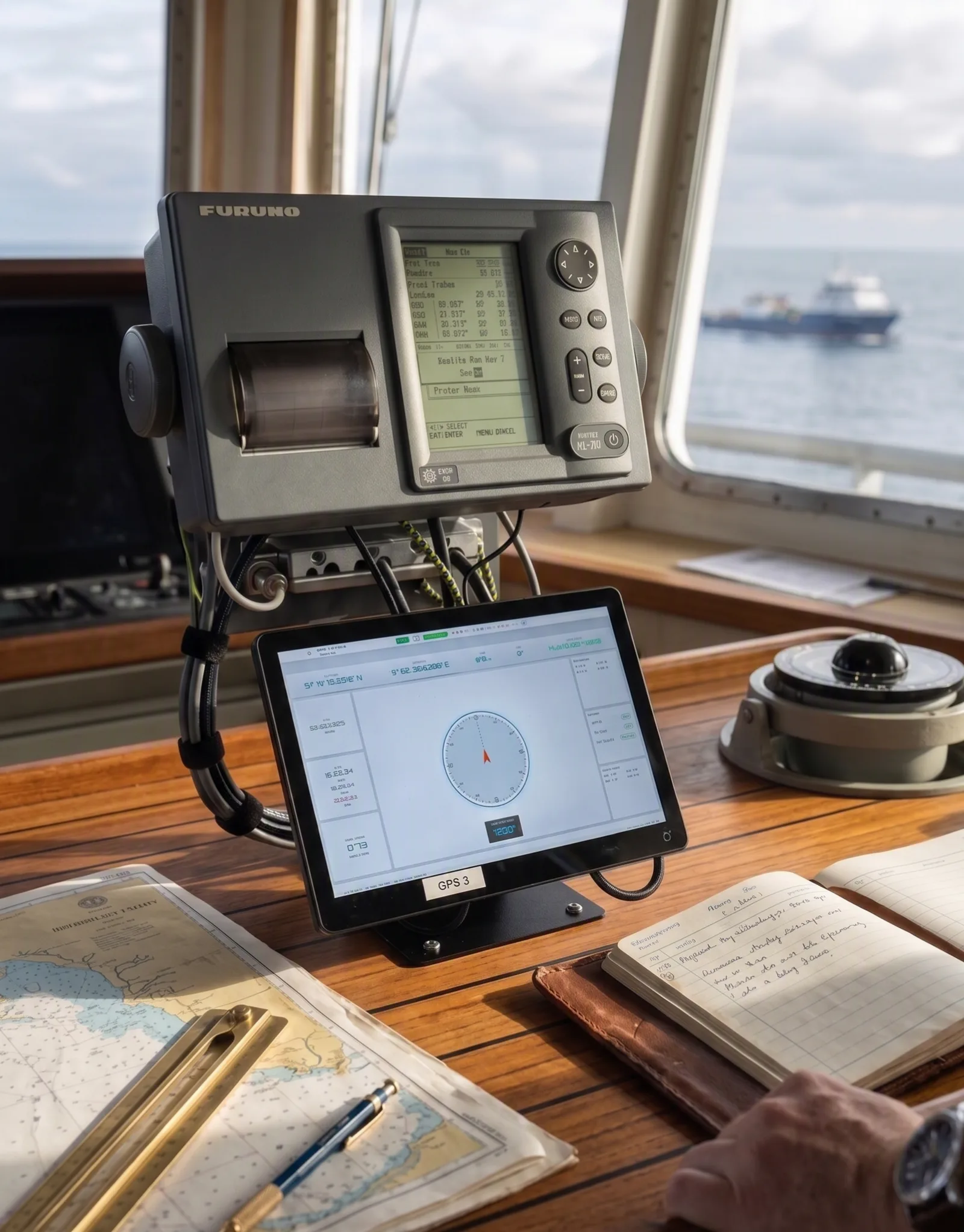 NavigationEarly access
DIDI GNSS
Know your position. Trust your position.
A spoof-resistant maritime GNSS receiver for contested waters. Up to 20 cm positioning paired with a live Trust Score and cryptographic signal authentication — so the bridge always knows how far the fix can be trusted.
- Live Trust Score (0–100) on every fix
- Cryptographic anti-spoofing built into the core
- Sea-trialled in the eastern Baltic
First deliveries Q1 2027
Explore product Compliance
DIDI MRV
CO₂ reporting, built for maritime compliance.
One platform for EU-MRV, UK-MRV and IMO-DCS. Emissions are calculated continuously and kept audit-ready — so reporting becomes a routine export, not a month-long scramble at the deadline.
- EU-MRV, UK-MRV & IMO-DCS in one platform
- Automated, always audit-ready reporting
- EU ETS cost visibility & live CII tracking
Partners we trust
Dutch fleets can order DIDI Chart, DIDI GNSS and DIDI MRV through our partners — a local contact, in your language and your timezone.
 HellevoetsluisDistributor and service agent for marine navigation, communication and connectivity systems.
 Delfzijl & RotterdamNautical safety and equipment supplier — charts, publications and inspections.
 Bleiswijk & RotterdamMarine and offshore equipment supplier — navigation systems, sales and onboard installation.
Is your bridge audit ready?
Six questions about chart updating that a PSC inspector, an ISM auditor or a charterer's vetting team can ask — and what DIDI Chart lets you answer them with.
Can you show when each vessel’s charts were last updated?
Every update is logged with date, vessel and result — per ship, exportable, without asking the crew to reconstruct it from emails.
Can you prove nothing unverified reached the ECDIS?
Every file is hash-checked twice against the supplier’s own values. The record shows what was verified on arrival, not only what was sent.
Is chart updating a procedure in your SMS, or a habit?
It becomes an automated procedure with its own evidence trail, instead of one that depends on a crew log being kept up to date.
Does anything still get plugged into the ECDIS?
No removable media, and no inbound path to the bridge — the two findings an inspector writes up most often simply stop existing.
Can you name the cyber measure in your charter party?
A measure you can name to a counterparty, with a continuous record behind it rather than a policy document describing an intention.
Could you answer all of this today, from your desk?
Fleet-wide status in a browser, on desktop, tablet or phone. An audit or a vetting questionnaire becomes an export.
MSC.428(98) · EU NIS2 · BIMCO cyber clause · TMSA 3 Element 13
From the fleet
Stories
Films and installations on working bridges — tap any one to open it.
Notes from the bridge and the workshop
Practical thinking on maritime technology, security, and navigation.
Take the riskiest routine off your bridge this quarter.
Tell us about your fleet and routes. A maritime engineer — not a sales script — confirms fit, pricing, and a non-intrusive rollout.